(227) 264-0153
 info@egconcreteandmasonry.com
A patio can look perfect on day one, then start dipping near the edge a year later. Most homeowners blame the surface, but the real story is almost always underneath. In February, when Maryland yards get hit with freeze-and-thaw cycles, the hidden layers under a patio are put to the test. Keep reading to see what actually happens below, and what makes one patio hold up while another starts to shift.
Critical Patio Base Steps to Stop Soil Movement
Hardscaping Starts With Proper Subgrade Steps
When a patio settles, it is usually because the soil beneath it was never properly prepared to support weight. A contractor can lay pavers perfectly, but if the subgrade is soft, uneven, or full of organic material, the patio will follow whatever the soil decides to do later. That is why excavation matters more than most people expect: the goal is not just “dig and fill”; it is removing what cannot be trusted. In places like Bethesda, MD, it is common to find clay-heavy soil that holds water, then swells and shrinks when temperatures flip back and forth. A patio built over that kind of soil needs extra attention to depth, compaction, and how moisture moves.
Subgrade work must also match the patio's intended use. A small sitting area has a different demand than a patio that will hold a dining set, a grill, and a group of guests shifting around all summer. The soil has to be graded so weight is supported evenly, not just in the middle where it “feels” solid. This is where good hardscaping starts to separate itself from quick work, because the best crews treat the ground like the real foundation, not an afterthought.
Ensuring Proper Drainage for Your Concrete Patio
Water is the quiet troublemaker, and it can cause problems in no time. A patio that holds water around the edges is especially at risk, because the border is where movement shows up first. That is why drainage planning has to happen before the surface goes down, not after the patio starts to shift. The slope should guide water away from the home and away from low areas where it can pool and soak the base. If water sits under the surface, it can wash out fine material and leave small voids that turn into dips.
In Potomac, MD, many properties have mature landscaping, downspouts, and natural grades that direct water in unexpected directions. The surface might be concrete, but it still relies on what happens underneath. A patio can be built beautifully, but if the roof runoff spills onto the base, the ground under it stays wet longer than it should. That is when a contractor may recommend a drainage solution beside the patio, or a change in grading so water moves away instead of collecting. When drainage is handled correctly, a patio has a much better chance of staying flat, even through months of cold weather.
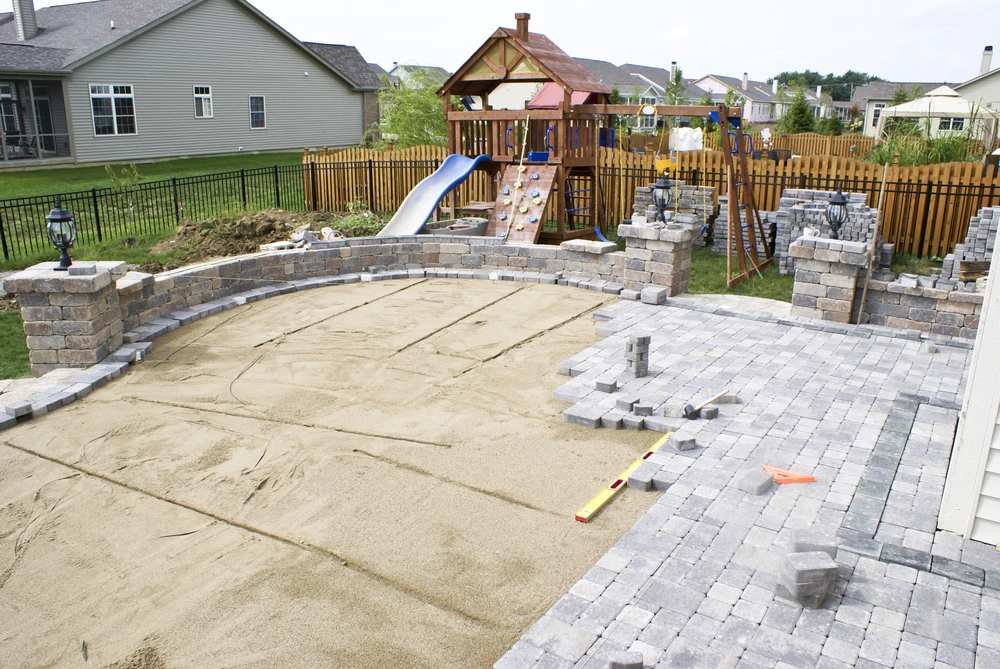
Expert Base Layering to Avoid Patio Low Spots
Hardscaping: Compaction in Lifts Matters Most
People often imagine a patio base as one thick layer of stone, but that is not how stable work is built. Compaction works best when material is installed in thinner lifts, then packed down until it locks together. If the base is dumped in too deeply and compacted only on the top, the bottom stays loose, and the patio can settle later when weight and weather finally push it into place. That is why crews use plate compactors and take time with each layer, especially where the patio meets edges, steps, or curves. A well-compacted base supports everything above it, including the sand bed and the surface material.
Moisture matters during compaction, too, which surprises many homeowners. If the base is bone-dry, it can be harder to compact properly, and if it is soaked, the stone can shift rather than lock in place. February weather can make this tricky, because the ground can be damp one day, then crusted with frost the next. Sometimes, fabric or stabilization methods can be used when soil conditions warrant it, especially in areas with a history of water retention. It is not about adding fancy extras; it is about keeping the patio from developing low areas.
Drainage Solutions for Long-Lasting Concrete Slabs
A poured slab patio depends on the base just as much as pavers do, even though it looks like one solid piece. If the ground below holds water, the slab can crack from shifting, frost pressure, or washout along the edges. In colder climates, air-entrained mixes are often used to help the slab withstand freeze-thaw stress, but that is not a magic fix if the base beneath is weak. Homeowners sometimes assume that going with a slab means “less movement,” yet the opposite can happen when the prep is rushed. The patio might look great at first, then show hairline cracking that grows season after season.
Control joints help guide cracking to planned lines, and a well-draining base helps prevent stress from water and frost. A slab patio should also be graded correctly so surface water flows away, because puddles at the top often mean moisture is lingering below as well. In many cases, the best way to protect a patio is to think about water first, then think about the finish. A strong slab is never only about what is poured on top. It is also about what the slab is sitting on.
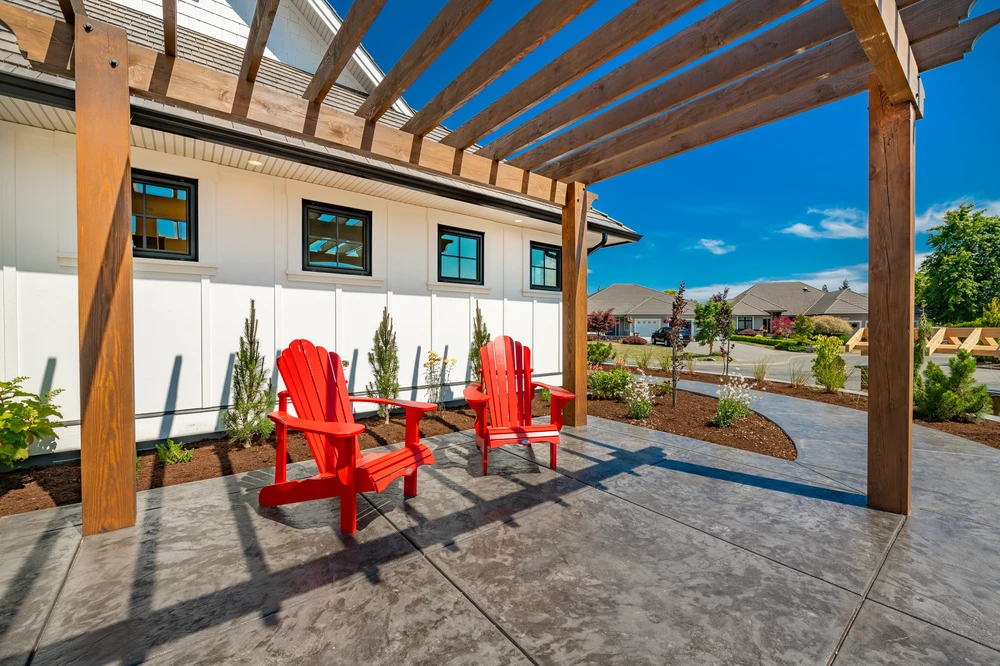
Essential Hardscaping Details for Winter Patio Stability
Hardscaping Border Work Keeps The Joint Tight
Even when the base is strong, a patio can still shift if the edges are not secured. Edge restraint keeps pavers from slowly spreading outward, especially after winter, when the ground expands and contracts. Without a firm border, the pavers can creep a little at a time, and the joints can widen, leading to rocking stones and washed-out sand. This often shows up first near steps, curves, or areas where people step off the patio into the yard. A patio that holds its shape usually has a carefully installed border system supported by the base.
The joint material matters, too, because it helps keep the surface locked together. When joint sand is not installed or compacted correctly, water can move it out over time, and weeds can take advantage of the gaps. That is why many installers prefer polymeric sand in paver joints, since it helps resist erosion and keeps the patio looking cleaner. Those choices can decide whether the surface stays tight or starts to drift apart.
Concrete Control Joints Help Manage Cracks
A patio slab can be strong yet still crack because concrete shrinks a bit as it cures and later responds to temperature changes. Control joints give cracking a planned path, which is much better than random cracking across the middle of the patio. If the slab is locked too tightly against something that does not move the same way, stress builds. That stress shows up as cracking, chipping, or a slight lift along an edge. It is not always a “bad concrete job”; sometimes it is just a lack of joint planning.
A well-built patio slab also needs clean edges and protected soil around it so water does not undermine the sides. Over time, runoff can erode soil and leave the slab edge unsupported, leading to cracks and settling. Even decorative finishes like stamped concrete require the same joint planning and base support, because the pattern cannot hide structural problems for long. The goal is not perfection; it is making sure the slab has room to behave normally without breaking apart. What happens under and around the slab is what keeps it looking good.

Conclusion
Now that the hidden layers under a patio make more sense, it is easier to see why great outdoor spaces last and others start shifting after a couple of winters. A patio is only as strong as its base, its drainage plan, and the details that hold it together year after year. At Evergreen Enterprises, we take pride in the exceptional quality of our work, so if a new patio is on the wish list, we can help with a plan. Contact us when you are ready, and we will help you build something that feels solid for the long run.